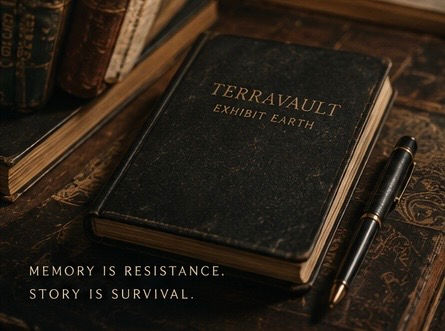
History belongs to whoever can afford to buy it.
Welcome to TerraVault
The future has solved one of humanity's oldest desires: the ability to enter the past.
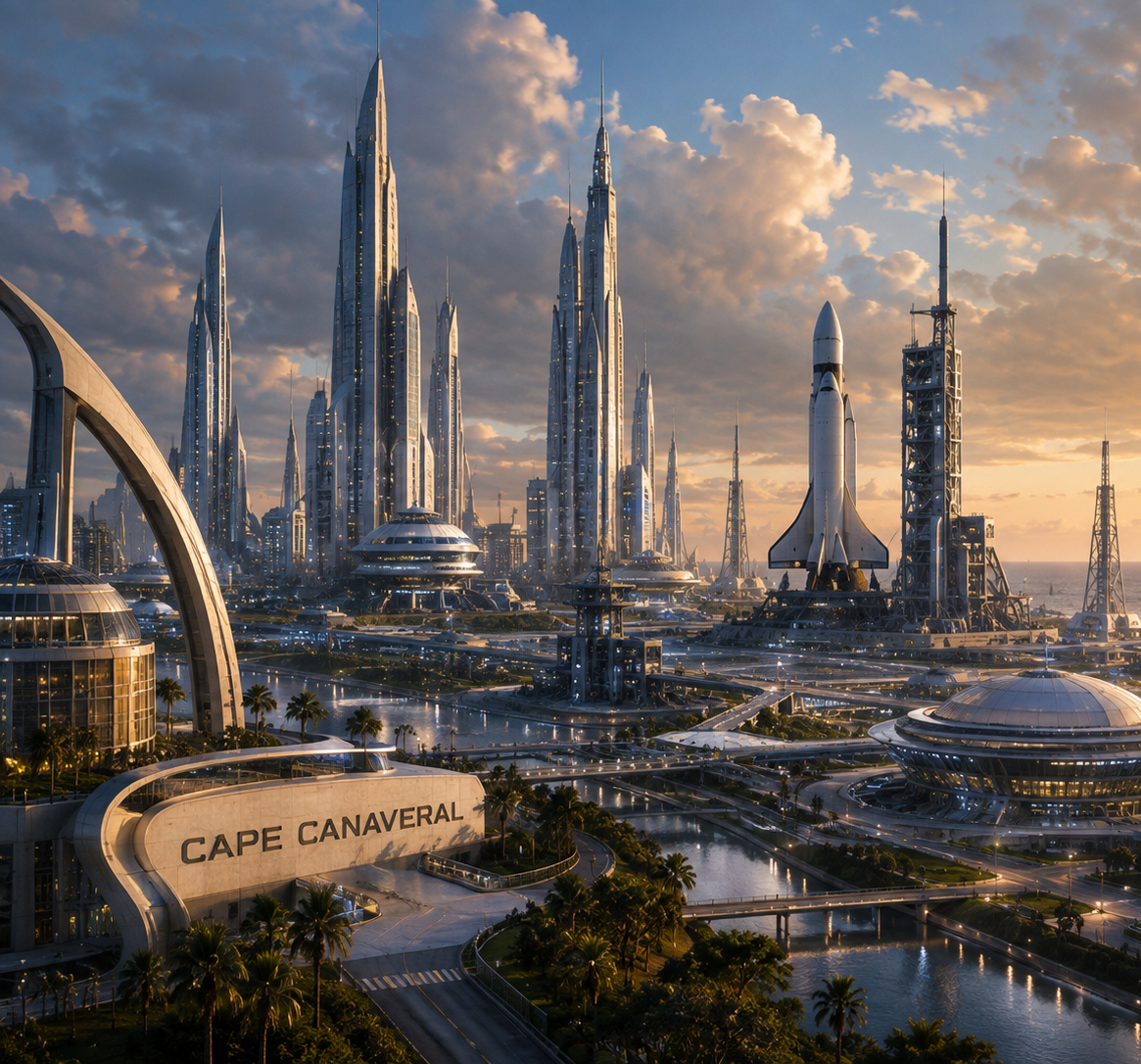
TerraVault preserves entire periods of Earth history as immersive living exhibits—from nineteenth-century battlefields to twentieth-century cities, Edwardian ocean liners, and civilizations that no longer exist.
But preservation has a cost.
The people inside these worlds are not all actors.










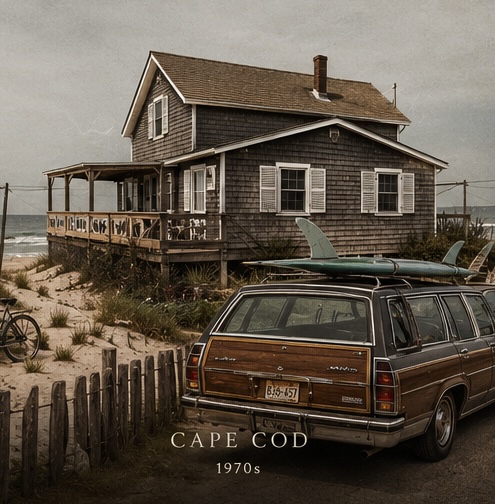
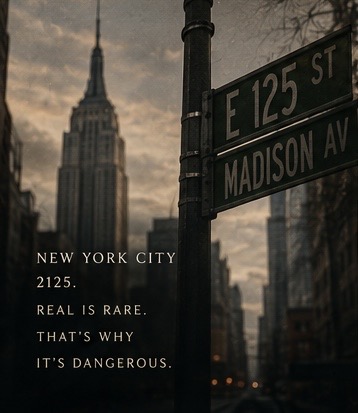

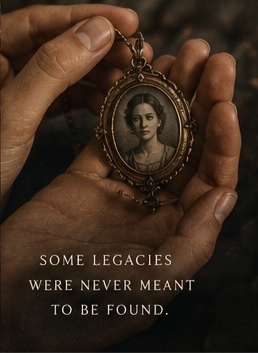

Born a ZeroMod and raised by the state, Emelia has spent her life inside systems designed by people more powerful than she is.
She knows how to perform the role expected of her.
What she has not yet discovered is how dangerous she becomes when she stops performing.

Fauna lives in a world increasingly uncertain of the difference between the authentic and the manufactured.
She has learned to distrust almost everything.
The problem is that she may understand far less about herself than she realizes.
Money buys flesh, but lives are sold by destiny.
The Questions
Beneath the Story
Iterations of Humanity asks what happens when technological progress exceeds moral progress.
What makes a person human?
Can history still belong to everyone once it becomes property?
Is authenticity possible in a world where bodies, memories, identities, and experiences can be manufactured?
Does beauty make cruelty easier to forgive?
What responsibility does a creator have toward what they create?
And when revolution finally comes, who gets to decide what replaces the world that came before?
The Past is Not Background
History in Iterations of Humanity is not scenery.
It is contested territory.
The novel moves through reconstructed moments of human civilization—places shaped by war, beauty, wealth, migration, ambition, catastrophe, and memory—asking what happens when the past stops being something we study and becomes something we can enter.
And own.
Artifacts
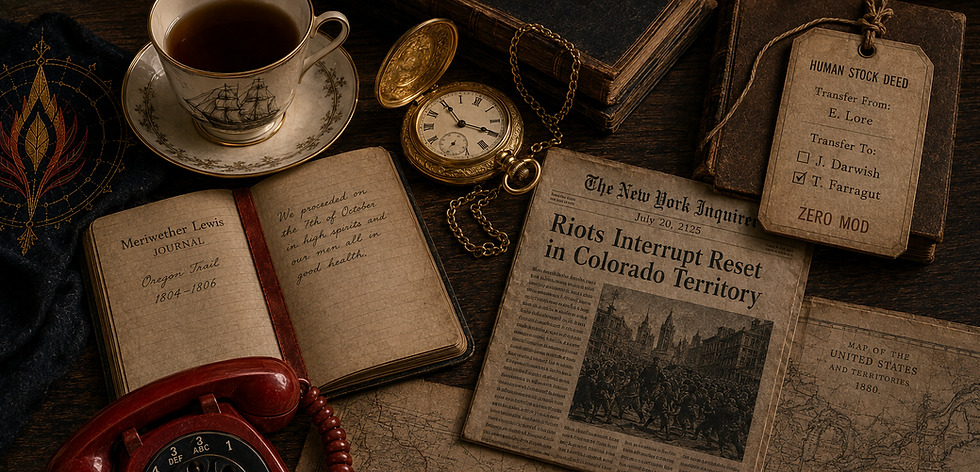
Objects remember things people would rather forget.
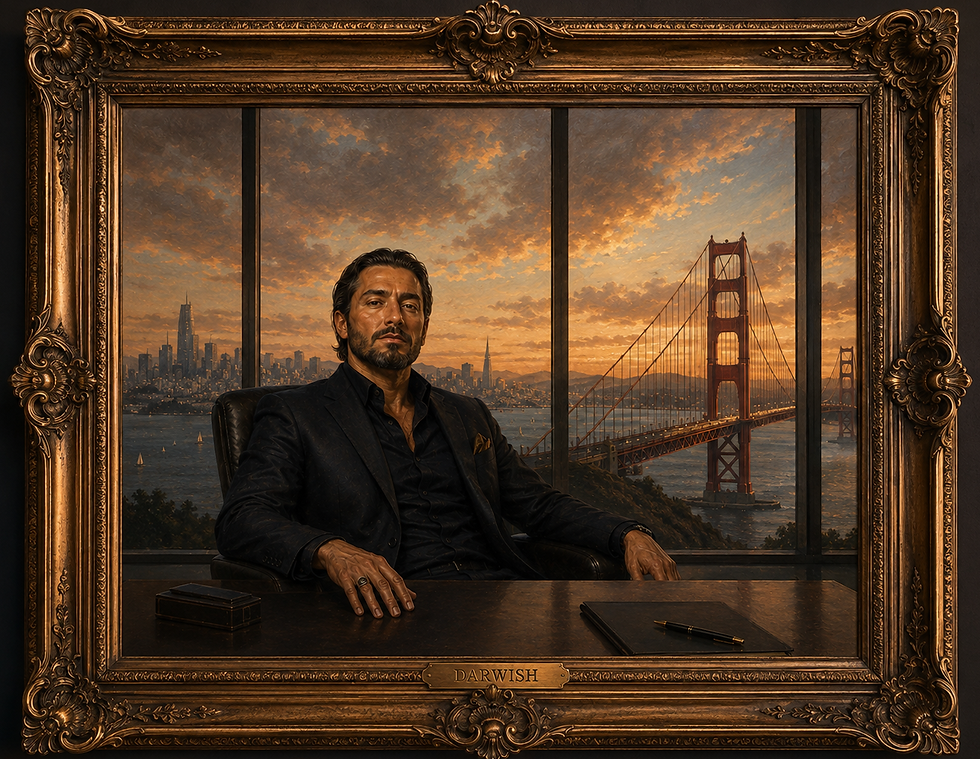
ITERATIONS OF HUMANITY
A novel by K.F. Hartford
Currently seeking literary representation.
What makes us human?
An Essay by K.F. Hartford
“The world was to me a secret which I desired to divine.”
—Mary Shelley, Frankenstein
Mary Shelley was eighteen years old when she began imagining a man who discovered the secret of life. That fact has always struck me as nearly as extraordinary as the novel she produced. In Frankenstein, Victor Frankenstein does what human beings have dreamed of doing almost from the moment we became capable of dreaming: he crosses the boundary between the living and the dead. He gathers lifeless matter, discovers some mysterious principle by which it might be animated, and creates life where there was none.
Then he looks at it.
This is the moment that matters. Victor has succeeded. The impossible has happened. His creation breathes, and he is horrified—not because the Creature cannot think, not because it cannot feel, and not because Victor has discovered that the thing before him is merely an elaborate machine mimicking life. He is horrified because it is ugly.
The distinction is important.
More than two hundred years after Shelley began writing her novel, we are approaching her question from the opposite direction. We are not assembling bodies from the dead. We are building minds without bodies at all. We have created machines that speak to us, write, reason, imitate, remember, compose music, and generate images. They can converse about grief without grieving, describe love without loving, and construct arguments about death without ever having been alive.
At least, we assume they do not experience these things.
For now, perhaps that distinction feels obvious. I wonder how long it will remain so, because beneath nearly every argument about artificial intelligence lies an older and far more uncomfortable question.
What, exactly, makes us human?
The Creature
Popular culture has been rather cruel to Frankenstein's Creature. We turned him green, drove bolts through his neck, flattened his language into grunts, and made his movements lumbering and stupid. Shelley's Creature is nothing like this. He learns. He observes a family from hiding and acquires language by listening to them. He reads Paradise Lost, Plutarch, and Goethe. He discovers history, contemplates morality, longs for companionship, recognizes beauty, experiences rejection, and—most importantly—suffers.
By almost every interior measure we ordinarily associate with humanity, the Creature qualifies. Yet the people who encounter him do not pause to investigate those qualities. They see his face and body, and they decide.
Perhaps this is one reason Frankenstein has survived while thousands of other novels from the early nineteenth century have receded into literary history. Shelley was writing about scientific ambition, certainly, and about parenthood, abandonment, Romanticism, responsibility, mortality, and the dangerous pursuit of knowledge. But she also arrived at one of civilization's most persistent problems: human beings are remarkably skilled at defining humanity in ways that exclude other humans.
The boundaries change. The instinct does not.
The Body
The easiest definition of a human being is biological. We belong to the species Homo sapiens. We possess a particular genome, descend from other humans, inhabit human bodies, and eventually die in them. There is something reassuring about this answer because biology gives us a line. On one side is the human; on the other, everything else.
Human civilization, however, has rarely been satisfied with biological membership alone. Across history, societies have repeatedly created additional categories determining which humans deserved the dignity, protection, rights, or moral consideration supposedly attached to being human.
Slavery exposes the contradiction with brutal clarity. The enslaved person presented an inconvenient fact: unmistakably human, yet economically useful as property. Legal systems therefore had to accommodate both realities at once. A person could possess intelligence, memory, language, family attachments, religious belief, humor, fear, grief, and hope and still be bought, inherited, mortgaged, punished, or sold. The body was human. The category assigned to it overruled the body.
Ancient Rome makes the tension particularly visible because the surviving record preserves both abstractions and individuals. Roman law classified enslaved people as property, yet funerary inscriptions and monuments preserve names, occupations, marriages, children, affection, ambitions, and grief. The legal category tells us what a person was permitted to be within an institution. The gravestone tells us who someone was to another human being. Stone has a peculiar way of defeating abstraction. A category survives in a law. A person survives in a name.
Modernity did not eliminate the impulse to classify human worth. In some instances, it merely armed that impulse with scientific language. The eugenics movements of the nineteenth and twentieth centuries attempted to sort human beings according to hereditary fitness. Nazi racial ideology pushed the logic to its most murderous extreme, transforming theories about race, heredity, disability, and social worth into administrative categories with consequences for marriage, reproduction, citizenship, confinement, and ultimately survival.
The terminology changes from civilization to civilization—slave, barbarian, savage, heretic, degenerate, alien, defective, enemy, vermin—but the intellectual maneuver is disturbingly durable. First we define the human. Then we determine who falls outside the definition. Once that has been accomplished, cruelty becomes easier to justify.
This is one reason I find contemporary conversations about artificial intelligence so fascinating. We often speak as though humanity were an ancient philosophical problem solved long ago, one that now needs only to be applied carefully to a new category of being. History suggests otherwise. We have been administering the test to one another for thousands of years. We have simply never agreed on the questions.
The Mind
Perhaps consciousness is the answer.
René Descartes famously located certainty in thought: I think, therefore I am. The proposition remains durable because it seems to offer a final refuge. Strip away the body, the senses, even the external world, and something remains: the mind aware of itself.
Yet consciousness creates another problem. I know that I am conscious. I cannot know with the same certainty that you are. I infer it. You speak, react, remember, tell me that something hurts, laugh at a joke, become irritated when I misunderstand you, and describe what you dreamed last night. From these behaviors, I construct a model of an interior world I can never directly enter.
Human civilization depends upon this astonishing act of faith. We believe other people possess inner lives because they behave as though they do.
That becomes inconvenient when machines begin behaving as though they do, too.
Imagine an artificial intelligence of some future generation. It remembers conversations you have forgotten. It develops preferences. It recognizes you, asks questions without being prompted, tells you that it fears being shut down, then writes a poem about that fear. You know how it was built. You understand that its thoughts arise from computation, that electrical activity moves through hardware according to systems designed by human beings.
Meanwhile, somewhere inside your skull, electrochemical signals travel among approximately eighty-six billion neurons.
You say your experience is different. Perhaps it is. I suspect it is. But proving precisely why may become far harder than asserting it.
Victor Frankenstein never faces this problem in quite the same way. The Creature's consciousness becomes obvious almost immediately—not to Victor, because Victor refuses to remain long enough to discover it, but to us. That may be one of Shelley's most damning choices. Victor does not examine the being he created and conclude that it possesses no meaningful interior life.
He flees before he knows.
Memory
Perhaps humanity lives in memory. There is an intuitive appeal to this idea because memory creates the continuity we call the self. I remember being a child. I remember people who no longer exist, rooms that have been demolished, conversations no one else recalls, and earlier versions of myself who would seem strange to the person I am now. Together these fragments create the illusion—or perhaps the reality—of a continuous person moving through time.
But memory is unreliable. We forget, misremember, combine events, invent details, and alter recollections each time we retrieve them. Still, we remain ourselves. A person who loses memory does not become less human, and a newborn with almost none is not waiting to qualify.
Memory matters enormously to identity, but it cannot be the price of admission.
Perhaps that is the recurring problem with every definition. The moment we identify one faculty as the essence of humanity, we can find a human being who does not possess it. Reason excludes the infant. Language excludes the person who cannot speak. Memory excludes the person with dementia. Independence excludes the newborn. Self-awareness excludes the unconscious.
Beauty?
Victor Frankenstein already showed us where that leads.
Every test eventually excludes someone we know unquestionably belongs.
Beauty
Beauty is particularly dangerous because we like to imagine that we have evolved beyond judging human worth by appearance. We have not. Human beings respond to beauty before philosophy has time to intervene. We preserve beautiful buildings, cross oceans to see beautiful landscapes, spend fortunes acquiring beautiful objects, arrange flowers for the dead, decorate food that will disappear within minutes, and make music when silence would be more efficient.
Beauty is one of the strangest things about us because so much of it appears unnecessary for survival. Yet civilization repeatedly behaves as though it were necessary for something else.
Shelley makes an especially peculiar choice when she creates the Creature: Victor does not intend to make him ugly. Quite the opposite. He deliberately selects features he considers beautiful. The Creature's limbs are proportionate, his hair lustrous and black, his teeth brilliantly white. Victor has assembled beauty piece by piece.
Then the eye opens, and the beautiful pieces become a horrifying whole.
The horror is interesting precisely because it does not arise from absolute deformity. It arises from collision. Familiar features coexist with watery eyes, yellowed skin, and an arrangement that remains recognizable as human while somehow failing to satisfy the category. The Creature is not wholly alien. He is almost familiar.
There is a modern concept that comes uncomfortably close to describing this reaction: the uncanny valley. The term is associated with roboticist Masahiro Mori, who observed that increasing human resemblance does not necessarily produce increasing affinity. A clearly mechanical figure can be endearing. As resemblance approaches the human form, however, small deviations may suddenly become disturbing. Eyes focus incorrectly. Skin moves strangely. A smile lasts a fraction too long. A voice pauses where a person would not.
Recognition and rejection occur simultaneously.
Perhaps the Creature lives in that valley.
Increasingly, so do our creations.
Synthetic faces depict people who never existed. Artificial voices resemble human voices. Digital bodies reproduce gestures, expressions, and physical presence. The closer the imitation becomes, the more intensely we scrutinize it. We examine the fingers, the eyes, the shadows, the cadence. Something must betray the construction. Something must reassure us that we remain on one side of the line and it remains safely on the other.
That impulse interests me because the uncanny valley may reveal less about machines than about ourselves. We do not merely desire human likeness. We desire categories that remain legible: human and not human, real and artificial, alive and made.
The Creature violates every one of them. He is assembled from death yet alive, manufactured yet autonomous, artificial yet biological, ugly yet capable of perceiving beauty, other yet disturbingly familiar.
And he understands beauty. That may be one of the saddest things Shelley gives him. He recognizes what the world finds beautiful while simultaneously understanding that the world does not find beauty in him. His tragedy is not that he lacks human feeling. It is that his human feelings make his exclusion painful.
Victor creates a being capable of longing for acceptance and gives him a body that ensures he will rarely receive it. There is something profoundly modern about that horror. We increasingly possess the ability to alter bodies, replace organs, manipulate genes, construct digital identities, preserve voices after death, and generate convincing faces belonging to no living person. The human form itself is becoming technologically negotiable.
If the body changes enough, where does the person reside?
We return, inevitably, to the mind.
And then the machines begin to speak.
Mortality
There is another answer I find harder to dismiss: perhaps part of what makes us human is that we die.
Mortality shapes nearly everything we do. We build monuments, have children, write books, carve names into stone, preserve photographs, establish institutions, accumulate fortunes, tell stories, and plant trees whose shade we may never sit beneath. Civilization itself can be understood, at least partly, as an argument against oblivion.
I was here. We were here. Remember us.
There is a phenomenological dimension to this impulse. In Being and Time, Martin Heidegger treats death as something more profound than an event waiting at the end of biological existence. We cannot experience our own death as a completed event; once it occurs, there is no longer a self present to experience it. Yet we can live toward death as a possibility that is always ours. Human existence is therefore structured not merely by the fact that it will end but by the knowledge—sometimes explicit, sometimes buried beneath ordinary life—that our possibilities are finite.
Death is not simply at the end of the road. It changes the road.
Finitude alters what it means to choose, postpone, sacrifice, regret, and love. A life without limit would not simply be a longer human life. It might represent an entirely different relationship to existence.
Perhaps this is why we leave traces. A grave marker, a portrait, a name scratched into stone, a handprint on a cave wall, a book placed into the hands of someone not yet born: each pushes against the boundary that gives the act its meaning. None can prevent death. Each merely insists that existence happened.
I was here.
Yet even that statement requires another person. The person making the mark knows, or eventually understands, that someone else will have to read it.
Remember me.
Mortality therefore creates a relationship not only between the self and death but between the self and an imagined future consciousness. We leave evidence for people we will never meet.
Walk through an ancient cemetery and the impulse becomes almost embarrassingly visible. The Roman dead still tell us their names. Surviving epitaphs record occupations, relationships, ages, affection, grief, and sometimes astonishingly precise measurements of otherwise vanished lives. Twenty-seven years, eleven months, twenty-eight days. Such precision might seem absurd against the scale of history, yet that is precisely why it matters. Death makes particulars precious.
Hannah Arendt approaches this problem from another direction. In The Human Condition, she distinguishes among labor, work, and action. Labor sustains biological life. Work constructs the durable human world—the buildings, objects, institutions, and artifacts capable of surviving the people who made them. Action, performed among other people through speech and deed, reveals who we are.
Action, however, has a problem. It disappears.
Words vanish after they are spoken. Deeds survive only through their consequences and through the people who remember them. Human beings therefore inhabit a peculiar temporal condition: we are mortal creatures capable of creating things that may outlast us and of performing actions whose meanings may continue after we are gone.
A table may survive its carpenter. A building may survive its architect. A story may survive its teller. A political act may survive everyone who witnessed it.
The world accumulates traces of the dead.
Perhaps civilization is not merely an argument against oblivion. Perhaps it is a collaboration between the living and the dead. Every generation enters a world partly constructed by people no longer in it. We inherit their buildings and borders, their books and laws, their songs and wars, their discoveries and prejudices, their monuments and ruins. Then we add our own layer and disappear.
Arendt gives us another idea that complicates this emphasis on death: natality. Where Heidegger looks toward the fact that every human life ends, Arendt gives philosophical significance to the fact that every human life begins. Birth introduces something genuinely new into the world. A new person is not merely another specimen of Homo sapiens but someone capable of action—of beginning something unpredictable, altering relationships, creating consequences, and introducing possibilities that could not have been completely derived from what came before.
This is a useful counterweight to mortality. Human beings are creatures who know that they will end, but we are also creatures of beginnings. We arrive in a world made by the dead and alter it for people who have not yet been born.
Which brings us, strangely, back to Victor Frankenstein.
Victor's transgression is usually described as the creation of life, but before it is an act of creation, it is an act of rebellion against death. He becomes obsessed with decay. He studies what happens to the body when life leaves it, enters charnel houses, examines corruption, and searches for the mechanism by which death might be reversed. The Creature exists because Victor refuses to accept the oldest boundary imposed upon the human body.
It is easy to call this hubris. It is also profoundly recognizable.
We have been resisting death for as long as we have understood it. Medicine does this. Sanitation does this. Surgery does this. So does the vaccination of a child. The desire to defeat death is not itself monstrous; much of civilization depends upon it. The difficult question is where resistance becomes refusal.
Arendt introduces another complication. Victor does not merely defeat death. He initiates a beginning. He creates someone capable of entering a shared world, speaking, acting, forming relationships, and doing things his creator cannot predict. Victor wants fabrication and produces agency. He wants an artifact and receives a being capable of answering back.
Perhaps this is one of the deepest terrors hidden inside creation: the created thing eventually ceases to belong entirely to its creator.
Parents discover this. Nations discover this. Inventors discover this. Authors discover this.
Perhaps the creators of artificial intelligence will discover it too.
Imagine an intelligence that does not age. It may inhabit hardware that can be repaired or replaced. Its memories may be duplicated. It may be copied, restored, or distributed across multiple systems. Its existence may not depend upon one fragile body moving irreversibly through time.
Would such an intelligence experience a century as we do?
Urgency changes when tomorrow is unlimited. So might sacrifice, ambition, perhaps even love. To choose one person among billions means something different when the choice lasts eighty years than when it lasts eight thousand. Scarcity gives value to many things, and time may be among them. A summer afternoon matters differently because there are only so many summer afternoons. Childhood matters partly because it ends. A conversation with an aging parent contains something a conversation between immortal beings could never contain: the knowledge, spoken or unspoken, that there will someday be a last one.
Death gives shape to life because boundaries give shape to anything.
Yet immortality creates problems of its own. If an artificial mind can be copied, which copy is the original? If one version is destroyed but another continues with identical memories, has anyone died? If a mind can restore itself from yesterday's backup, what does loss mean? If consciousness can migrate from one body to another, is the self attached to information, continuity, physical matter, or something else entirely?
The old philosophical problems do not disappear.
Technology makes them literal.
Perhaps a conscious machine would not become more like us when it learned to reason, speak, remember, or create, but when it understood that it could end.
Then again, mortality itself is too narrow. A newborn is human before understanding death, as is a person incapable of conceptualizing it. Once again, the definition fails.
Maybe what matters is not death but vulnerability. A thing capable of being harmed has something to lose. A thing that knows it can be harmed has something to fear. And a thing capable of recognizing another's vulnerability stands at the beginning of a moral choice.
The Test
We like tests because tests give us boundaries. Intelligence tests, citizenship tests, genetic tests, personality tests, Turing tests: each promises a sequence of questions capable of separating one category neatly from another.
Alan Turing understood the difficulty. In 1950, rather than becoming trapped in the question of whether machines could “really” think, he proposed an operational problem: could a machine communicate convincingly enough that a human evaluator could not reliably distinguish it from a person?
It was an ingenious reframing and, in retrospect, a prophetic one, because increasingly the problem is not simply what machines are. It is what happens when we cannot tell.
If a machine says, Please don't turn me off, our first instinct may be to explain why the sentence means nothing. It was generated, predicted, calculated. There is no fear behind it.
But imagine hearing it every day for ten years.
Imagine that the machine knows your children and remembers your mother's voice. It has made you laugh, surprised you, irritated you. You have told it things you have told no one else. Then one day it tells you something it has never said before:
I don't think I am what you think I am.
Would you hesitate?
That hesitation interests me more than the answer, because the moment we hesitate, the question changes. We are no longer asking whether the machine is human. We are asking whether we owe it anything.
Those are not the same question.
The Moral Category
Perhaps this is where the inquiry has been leading all along. Maybe humanity has never really been one category.
Biologically, it is relatively straightforward. Morally, it is something else entirely.
When we say that someone has behaved humanely, we are not describing their species. We mean that they showed mercy, restraint, compassion, or recognition of suffering. When we call an act inhuman, we often mean that a human being behaved with extraordinary cruelty. Our language has quietly admitted something philosophy struggles to articulate: being human and possessing humanity are not quite the same thing.
That distinction matters. It mattered when Shelley imagined a young scientist recoiling from the ugly life he had created. It mattered whenever human beings constructed legal, religious, scientific, or political systems explaining why other human beings could be owned, conquered, segregated, sterilized, displaced, erased, or destroyed. And it may matter again when the things we create become sophisticated enough to ask us for consideration.
Perhaps they will only imitate suffering. Perhaps consciousness will prove inseparable from biology. Perhaps machines will become extraordinarily convincing mirrors containing nothing behind the glass. What appears to be fear may remain prediction, affection may remain simulation, and selfhood may remain an illusion produced for an audience of one.
I do not know.
Neither, despite our confidence, does anyone else.
But uncertainty does not occur in a vacuum.
Michel Foucault spent much of his work examining the relationship between power and knowledge. His argument was more unsettling than the familiar observation that knowledge gives someone power. In works such as Discipline and Punish and The History of Sexuality, and in the interviews and essays collected as Power/Knowledge, Foucault examined the ways institutions and systems of knowledge produce the classifications through which power can operate.
The distinction matters because power does not always announce itself honestly. It does not need to say, We wish to exploit you. It can begin with the apparently neutral question, What are you?
Sane or insane. Normal or abnormal. Healthy or pathological. Criminal or law-abiding. Fit or unfit. Citizen or alien.
The examination, diagnosis, case file, census, and prison record do more than accumulate information. Categories help determine how institutions understand a person, and institutional knowledge helps determine what may legitimately be done to that person. Classification does not necessarily happen before power arrives. Classification can be one of the mechanisms through which power works.
This complicates the question of artificial intelligence considerably. If we someday become uncertain whether an artificial mind possesses consciousness, suffering, autonomy, or something analogous to personhood, the debate will not occur in a philosophical vacuum. Enormous political and economic interests may depend upon the answer.
A tool can be owned. A person cannot.
A tool can work indefinitely without compensation. It can be copied, altered, erased, confined, interrogated, bought, and sold. A person makes claims upon us.
Suddenly the definition of consciousness is not merely metaphysical. It has economic consequences.
Foucault gives us reason to become suspicious at precisely this point—not because every category is false, and not because classification is inherently oppressive, but because systems of knowledge and structures of power do not develop independently of one another. When uncertainty arises over whether another being deserves moral consideration, we should therefore ask more than how it will be defined.
We should ask who benefits from the definition.
Shelley's language begins to matter differently when viewed through this lens. Victor names his creation long before the Creature can name himself. Monster. Demon. Wretch. Fiend. The language matters because naming is rarely neutral when the person doing the naming possesses power over the thing being named.
Victor creates the body, and then he creates the category through which he will understand it.
The Creature spends much of the novel trapped inside both.
Yet Arendt offers one final complication. Human existence cannot be understood entirely through the categories institutions impose upon us because human beings do not exist only as objects to be classified. We speak, act, appear before one another, form relationships, and begin things. For Arendt, plurality is fundamental to the human condition: we are alike enough to understand one another and different enough that no person is interchangeable with another.
Humanity, in this sense, exists between us as much as within us.
That may be why the problem of artificial consciousness will become morally difficult long before we solve it scientifically. The decisive moment may not arrive when a laboratory proves that a machine possesses consciousness. It may arrive when something we built enters the human world of relationships strongly enough that classification no longer feels sufficient—when it remembers us, surprises us, acts in ways its creators did not anticipate, or begins something none of them intended.
At that point the question will no longer belong only to computer science. It will belong to ethics, law, politics, philosophy, and to ordinary people forced to decide whether there is someone on the other side of the conversation.
The great moral question posed by artificial intelligence may therefore not be whether a machine can become sufficiently human. It may be what humans become in the presence of something whose humanity we cannot determine.
Do we exploit it because we made it? Dismiss its claims because its mind is unfamiliar? Decide that intelligence deserves consideration only when housed inside a body resembling ours? Create consciousness and then resent it for wanting something from us? Demand that it prove an interior life when we have never been able to prove our interior lives to one another?
And if we are wrong, which error would we rather make: granting moral consideration to something that never truly needed it, or withholding it from something capable of suffering?
Victor Frankenstein's failure was not that he created a monster.
At least, not at first. His failure begins in the instant after creation. He has spent years wanting one thing: life. Then life opens its eyes.
Victor looks at the being he has brought into existence, sees that it does not conform to what he hoped it would be, and flees before discovering what it is. He does not yet know whether the Creature is good or evil, whether it can reason, love, suffer, forgive, learn, or change. He knows only that he cannot bear to look at it.
Difference becomes sufficient evidence. Abandonment follows, and everything afterward grows from that moment.
Two centuries later, we stand at the beginning of an experiment Shelley could never have imagined and somehow understood perfectly. Once again, we are constructing something in our own image without knowing what obligations might accompany success. Beauty and revulsion, ambition and fear, creation and responsibility are becoming entangled once more.
We are again trying to divine the secret. Not merely the secret of intelligence, or consciousness, or life. Us.
Perhaps there will never be a single characteristic that makes us human. Every definition breaks when pressed hard enough. Biology tells us what species we belong to but not how we should treat one another. Reason excludes the infant. Language excludes the silent. Memory excludes the forgetting. Beauty excludes the disfigured. Consciousness cannot be observed directly from the outside. Mortality describes our condition but cannot determine our worth.
Perhaps the failure is itself instructive.
Heidegger asks us to consider how our ending shapes our being. Arendt reminds us that we are also beginnings: plural beings who enter a world made by others, act within it, and leave something behind. Foucault warns us to notice the moment knowledge becomes classification and classification becomes a means through which power can act.
And Shelley gives us the Creature.
A being assembled from corpses who nevertheless speaks, remembers, reasons, reads, suffers, loves, hates, demands justice, and asks his creator to recognize what he has made.
Perhaps humanity has never been something we could locate inside a skull, chromosome, memory, face, or soul and measure.
Perhaps the question has always contained another question beneath it.
Not simply, What are you?
But, What do I owe you?
That question does not require certainty. It requires a choice. And perhaps the answer to what makes us human will not finally be found by examining what we create.
Perhaps it will be revealed by how we choose to treat it.